Understanding Layered Liquids: A Hands-On Approach
Intro
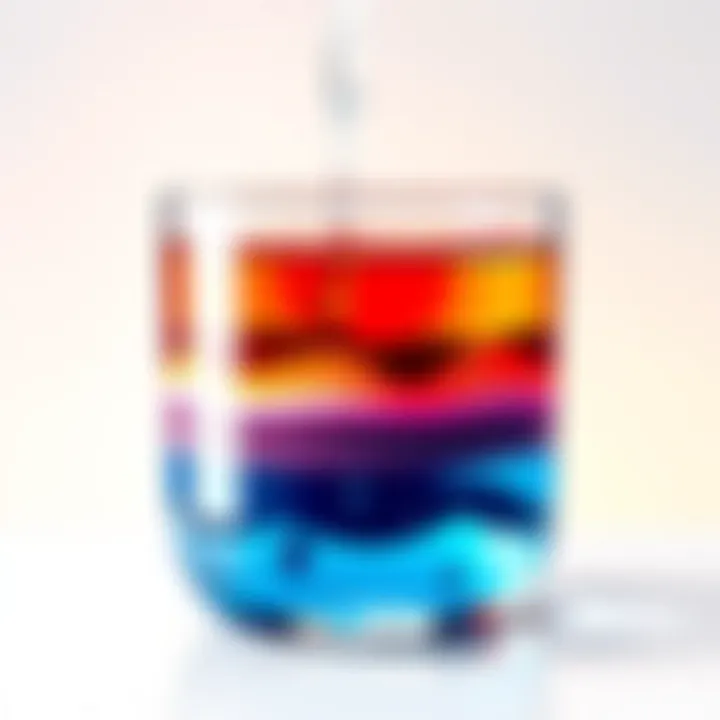
Layered liquids offer a fascinating glimpse into the worlds of density and immiscibility, making them perfect for budding scientists eager to explore. Imagine pouring colorful liquids into a clear container only to watch them stack up just like colorful building blocks. This visual magic captivates not only children, but also curious adults, as it intertwines beauty with fundamental science principles. Understanding why some liquids stay separate while others mix seamlessly can foster a deeper appreciation for the physical world.
This guide aims to empower young scientists, parents, and educators with the knowledge needed to conduct engaging experiments with layered liquids. By sparkling curiosity and instilling essential scientific concepts, we’ll lay the groundwork for future explorations in the sciences. So, roll up your sleeves, gather your materials, and let’s dive into the enchanting realm of layered liquids!
Prelude to Layered Liquids
Layered liquids present a fascinating glimpse into the nuances of liquid behavior. Understanding this topic is central to grasping fundamental scientific principles, such as density and immiscibility. One can’t understate the value of introducing young learners, like elementary school children, to the world of layered liquids, as it serves as a stepping stone to broader scientific exploration.
The Concept of Layered Liquids
Layered liquids refer to the phenomenon where different liquids, due to their varying densities, settle into distinct layers when combined. It’s a simple yet captivating experience to observe. Picture a salad dressing: oil and vinegar may swirl together for a moment, but soon enough, they separate into two distinctive layers. This separation happens because the oil is lighter than the vinegar, causing it to float on top.
The principle behind layered liquids is rooted in density—the measure of how much mass is contained in a given volume. Liquids with lower density will always rise above those with higher density. Understanding this concept not only enhances scientific literacy but also sharpens observation skills. When children see colors, or even sounds from different layered liquids interacting, they become engaged in learning.
Why Study Liquid Layers?
Studying liquid layers is essential for multiple reasons.
- Cultivating Curiosity: Children learn better when they engage their curiosity. Layered liquids invite inquiry. When kids mix them, they question why one liquid floats and the other sinks.
- Foundational Science Skills: Exploring layered liquids lays the groundwork for understanding key scientific concepts. Familiarity with such phenomena can lead to broader understandings in physics and chemistry.
- Developing Critical Thinking: Making predictions about the outcomes when mixing different liquids hones critical thinking skills. Discussions about why certain liquids layer rather than mix involve deepening reasoning and analytical thought.
- Hands-On Learning: The process of doing experiments with liquids helps solidify abstract concepts. Watching liquids settle into layers provides a visual and tactile experience that spells a primary lesson in science.
Learning about layered liquids doesn’t just happen in a vacuum. It connects to real-world applications, making it relevant beyond the classroom. Whether through nature, like in the case of oil spills on water, or in everyday products like lotions and perfumes, engaging with this topic opens up a world of discovery.
"Curiosity is the engine of achievement."
Thus, layered liquids can act as a fascinating starting point for parents, caregivers, and educators who are invested in cultivating a love for science in young learners. The excitement generated from exploring the layers of liquids can lead to profound scientific understandings down the road.
Scientific Background
Understanding the scientific background of layered liquids is crucial, as it sets the stage for engaging experiments that introduce core concepts like density and immiscibility. This knowledge invites curiosity and leads to a hands-on exploration of liquid behaviors, making complex scientific principles more relatable for young learners. By grasping these foundational ideas, participants are better equipped to observe and interpret their experimental results, effectively linking theory with practice.
Understanding Density
Density plays a pivotal role in establishing layers within liquids. Essentially, density refers to how much mass a substance has in a given volume. When discussing layered liquids, it’s important to recognize that different liquids have varying densities, which ultimately determines how they interact with one another. For instance, oil is less dense than water, allowing it to float on top when poured together.
An engaging way to visualize density is through the well-known experiment involving the mixing of corn syrup, water, and vegetable oil. Each liquid occupies a different layer, showcasing their unique densities. When explaining this concept to children, comparing liquids to everyday items can be helpful. You might say that syrup is
Materials Required
Understanding what materials are needed is vital in carrying out experiments involving layered liquids. The right supplies ensure that the experiment not only proceeds smoothly but also yields informative observations. Having all necessary items ready can make the difference between a successful learning experience and a frustrating one. This section will cover both essential supplies and optional additions to create the best setup for exploring liquid layers.
Essential Supplies
To start any experiment involving layered liquids, certain materials are absolutely crucial. Here’s what you’ll need:
- Clear Containers: Using clear jars or glasses is essential as they allow you to observe the liquid layers forming. Wider containers can provide a better view.
- Liquids of Varying Densities: Common choices include water, oil, and syrup. These liquids have different densities, allowing for clear layering when poured carefully.
- Food Coloring: Adding drops of food coloring can help visualize the distinct layers. It’s a simple way to enhance the visual appeal and effectiveness of the experiment.
- Measuring Tools: A measuring cup or a syringe can aid in accurately pouring liquids. This precision contributes to better outcomes in your layering.
Remember, the goal is to observe how different liquids interact based on their densities. Having these core supplies will get your experiment off the ground.
Optional Additions
Once you’ve got the essentials, a few optional materials can enrich the experience. While not strictly necessary, they provide further avenues for exploration:
- Other Liquids: Experimenting with additional liquids such as coconut milk or dish soap can add layers of intrigue. Each liquid will behave differently, based on its density compared to the others.
- Spoon or Stir Stick: In some cases, you might want to mix things up a bit. Having a spoon on hand allows for gentle stirring without disturbing the entire setup too much.
- Scale: For those interested in deeper scientific exploration, a scale could help measure the exact density of each liquid. This adds an experimental precision that ties back to the scientific principles at hand.
- Temperature Measurement: A thermometer could also be useful to explore the effects of temperature on liquid density. It opens a door for discussion about the science behind temperature and state.
In a layered liquid experiment, each supply plays a crucial role in understanding density, immiscibility, and beyond.
By gathering and preparing these materials beforehand, you set the stage for an engaging and insightful scientific adventure.
Setting Up the Experiment
Setting up the stages of an experiment is one of the most vital parts of any scientific exploration. In our case, creating an experiment with layered liquids not only allows kids to visually grasp complex scientific phenomena but also instills essential skills in preparation and organization. The setup paves the way for clarity in the experiment, ensuring that every participant knows what steps to follow, what materials to use, and how to record and analyze results.
When setting up the experiment, it’s crucial to have a clear understanding of the process as it simplifies the teaching moment. Children often learn best through engaging, hands-on activities, and arranging their workspace thoughtfully can enhance their focus and enthusiasm. Additionally, a structured setup lowers the chances of accidents, fostering a safer learning environment.
Step-by-Step Instructions
- Gather Your Materials: Before diving in, assemble all the necessary supplies. You will need:
- Prepare Your Workspace: Make sure to work on a flat, stable surface. Lay down newspapers or a plastic sheet to catch spills. Organization here can save a lot of time and mess later on.
- Measure Out: Begin by measuring equal volumes of each liquid you want to layer. This ensures that you have consistent results.
- Layering Technique: Start pouring the liquids slowly, one at a time. It’s essential to pour gently, preferably over a spoon, to minimize the disturbance of the already poured liquid. Aim to let the heavier liquid sink while the lighter one floats.
- Observation: Once your layers are set, observe the interface between each liquid. Ask the participants to discuss what they see and hypothesize about the density of each one.
- Document Findings: Encourage kids to write down their observations. This consolidates their learning and makes for interesting discussions later on.
- Various liquids with different densities (like water, oil, and honey).
- Clear cups or jars for layering.
- A pipette or a spoon for careful pouring.
- A small scale for measuring the densities, optional but useful.
- A stirrer to mix if needed.
Safety Precautions
Working with liquids can be safe if proper precautions are taken. Here’s what you should keep in mind:
- Adult Supervision: Always have an adult nearby, especially when children are performing the experiment.
- Protective Gear: Wear goggles to protect eyes from splashes. Although most liquids used are safe, it’s a good habit to teach.
- No Tasting: Make it clear—no sampling the liquids! Even household items like vinegar or dish soap can cause discomfort if ingested.
- Clean Up After: Ensure there are sponges or paper towels ready for cleaning spills immediately to avoid slipping hazards.
Important Reminder: A clean work area minimizes risks. Taking a moment to organize everything can lead to a smoother and more enjoyable experiment.
Setting things up properly makes a world of difference for educational experiments like layered liquids. With these carefully laid out steps and precautions, the exploration is bound to go off without a hitch.
Observing the Results
When conducting the layered liquids experiment, observing the results can reveal a wealth of knowledge. It’s not just about blending liquids to see how they react; it's about peeling back layers of understanding regarding the fundamental principles of science, particularly density and immiscibility. This section showcases the significance of keen observation during the experiment while offering insights into what participants can learn.
Interpreting Layer Formation
Layer formation in liquids happens due to differences in their densitiy. For instance, when you pour honey, which is denser, over water, it sinks instead of mixing. This visual cue allows young learners to grasp the concept of density in a tangible way. It's like a visual dance of sorts, each liquid holding its ground based on its mass per unit volume.
To further interpret layer formations, participants should ask questions like:
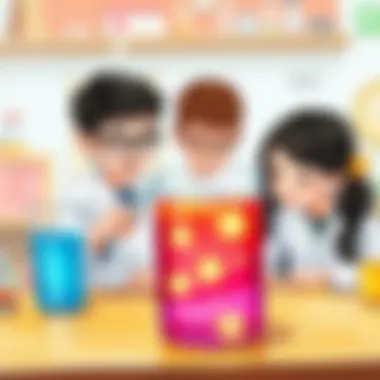

- What do the colors of each layer tell us? This can lead to discussions about the properties of various liquids and how they interact.
- How clear or cloudy is each layer? This might touch upon solutions versus pure substances, enhancing learning.
"Layer formation is like nature's way of illustrating principles in real time. Make it a spectacle by observing closely!"
Understanding this layer behavior isn’t just scientific jargon; it bridges into daily observations like how oil and vinegar separate in salad dressing or the beauty of a sunrise reflecting on a calm lake. These examples resonate with children, connecting abstract ideas to familiar experiences.
Recognizing Patterns
Recognizing patterns in the layered liquids can enhance the learning experience. Children can notice that liquids often settle into distinct layers based on their density. This observation can lead to insightful discussions about similar patterns in nature and everyday life.
- Are there any commonalities between liquids that created the same color? This encourages the exploration of color and composition.
- How do temperature and viscosity affect layer separation? This incorporates a broader scientific context, inviting inquiries into how liquids behave differently under various circumstances.
The beauty of recognizing these patterns lies not just in the visual, but also in the analytical skills it fosters. Young scientists learn to think critically about their results and the world around them—asking not just what they see, but why it happens. This depth of inquiry is what educates and empowers the next generation.
Through these careful observations and interpretations, participants become more than just passive learners—they become engaged explorers, actively participating in their scientific journey.
In summary, this section emphasizes that observing results is not merely a step at the end of an experiment, but the heart of scientific exploration. It influences everything from hypothesis formulation to parental discussions, making each observation a stepping stone towards deeper understanding.
Applications of Layered Liquids
The study of layered liquids offers a treasure chest of knowledge beyond just observation. It intertwines science with practical applications, giving depth to the theoretical concepts of density and immiscibility. By delving into the applications of layered liquids, we can better appreciate their significance in both natural and industrial realms, as well as their educational uses.
Real-World Examples
Natural phenomena
Layered liquids are all around us, often hidden in plain sight. Take the example of oil and water. When you mix them, they don't unify. Instead, they form distinct layers. This is a straightforward illustration of different densities and immiscibility at play. Such natural phenomena can be observed in various bodies of water where oils are found floating on the surface. The key characteristic about this occurrence is how it reflects the principles of density and the behavior of fluids. It's a valuable choice for our article because it makes the concepts relatable and tangible for young minds.
The beauty of this phenomenon lies not only in its visual appeal but also in its educational potential. It invites students to ponder why oil floats on water, leading them to explore less intuitive concepts like density gradients. However, while this example is captivating, it can be somewhat limiting due to environmental implications, especially concerning water pollution.
Industrial applications
When it comes to practicality, layered liquids have their say in many industrial processes. For instance, in the oil industry, the separation of crude oil from water is a crucial operation. Layered liquids play a critical role here, as workers use density differences to isolate hydrocarbons efficiently. This characteristic makes it a prime focus for industry, where the ability to separate and purify materials is invaluable.
The unique feature of industrial applications involves scaling up these principles into complex systems, like using centrifuges to separate different liquid mixtures. While highly effective, this process can also entail significant energy use, which is both an advantage and disadvantage. It showcases the importance of sustainability in industrial practices—how we can harness natural science while also being mindful of the environment.
Educational Impact
Connecting concepts
Linking principles of science to real-world applications can vastly enhance understanding. Layered liquids do just that by connecting abstract concepts of density and immiscibility to visible and tangible outcomes. This bridging of knowledge is crucial in maintaining interest and curiosity among young learners. It's not just a theoretical exercise; it emerges as a beneficial point that makes science relatable.
Additionally, this connection helps students to grasp how these basic principles intersect with larger scientific topics. For example, understanding layered liquids can lead to discussions on ocean stratification's impact on marine ecosystems. However, while this connection can enhance learning, it sometimes demands a more sophisticated understanding of science which might be challenging for younger students.
Encouraging inquiry


Layered liquids also serve as a gateway for fostering greater inquiry in science education. Young learners often have a natural curiosity about why things behave the way they do. Layered liquids invite questions like,
Experiment Modifications
The exploration of layered liquids offers a foundational science experiment rich in concepts of density and immiscibility. However, a one-size-fits-all approach doesn’t flutter in a classroom full of diverse learners. Tailoring the experiment through modifications makes it accessible, engaging, and educationally meaningful for all participants. By adjusting the complexity and focus of the activities, we can ensure that each child's curiosity is piqued and that they gain a solid foundation in scientific concepts.
For Younger Participants
For our budding scientists, simplicity is key. The goal is to create an environment where exploration leads to excitement rather than confusion. Here are some modifications to consider:
- Simplified Liquids: Use a smaller number of liquids to demonstrate the layers. Instead of using five or six, stick with just two to three liquids. This helps to keep focus and clarity.
- Visual Aids: Incorporate visuals such as diagrams or illustrations that show what the layers will look like. Kids can easily grasp the idea when they have something to look toward.
- Guided Questions: Offer simple questions throughout the experiment to keep young minds engaged. For example, "Which layer do you think will sit on top?" or "What do you think will happen when we pour this liquid?"
These adaptations not only make the activity more approachable but also deepen understanding. It’s about fueling their natural curiosity without drowning them in complexity.
For Advanced Exploration
For older or more experienced participants, there is an opportunity to elevate the learning experience. Here’s how to steer the experiment towards a more challenging venture:
- Multiple Layers: Introduce additional liquids with varying densities. By allowing participants to experiment with four or five different liquids, they’ll witness the intricate dance of density firsthand.
- Temperature Variation: Encourage older students to explore how temperature affects liquid behavior. Experimenting with warm and cold liquids can add another dimension to the study of density.
- Scientific Method Application: Challenge the participants to formulate a hypothesis before beginning the experiment. What do they think will happen? Afterward, they can compare outcomes with their original predictions, thus reinforcing critical thinking and analysis skills.
By implementing these modifications, the experiment becomes a laboratory of ideas catering to both the curious minds of younger learners and the analytical skills of advanced students. Ensuring success will hinge on how well the activities are tailored to fit various learning styles and skill levels. Keeping flexibility in your approach encourages a nurturing environment conducive to exploration and discovery.
Encouraging Further Exploration
Encouraging further exploration within the context of layered liquids is not just about letting the little ones play around with some colorful liquids. This section emphasizes that inquiry and curiosity are central to learning. Experiments related to layered liquids provide an excellent launching pad for deeper understanding of scientific principles. They can evoke a sense of wonder and fascination in young minds, sparking their interest in science.
Instead of merely observing what happens, students can be encouraged to ask questions like, "What if I use a different liquid?" or "How does the order of the liquids change the outcome?" By prompting children to engage more comprehensively, they learn to formulate hypotheses, perform experiments, and analyze results. It nurtures critical thinking and enhances problem-solving skills, both of which are essential in science education.
Suggested Follow-Up Activities
- Layered Liquid Density Tower: This activity allows children to experiment by creating a density tower with various liquids like honey, corn syrup, dish soap, and oil. Each liquid will separate according to its density, providing a visually striking result.
- Color Mixing Exploration: Add food coloring to different liquid layers. Let the children observe how colors interact when mixed, discussing how certain liquids blend while others do not.
- Temperature Variations: Conduct experiments with liquids at different temperatures. The children can heat or cool certain liquids, then observe how that affects layering and mixing.
- Homemade Immiscible Liquids: Challenge the kids to create their own layered liquids using household items like water or vinegar. They can experiment with oils or other non-miscible liquids, prompting discussion on why certain liquids mix while others remain separate.
Key Questions for Discussion
- How did changing the order of liquids affect the layering results?
- Why do some liquids mix while others form distinct layers?
- What might happen if you added a solid object to the liquid layers? How would this affect density?
- How do temperature and pressure play roles in the behavior of liquids?
Asking these questions encourages deeper understanding and allows students to take ownership of their learning experience. It emphasizes the excitement that can come from scientific exploration and reinforces the importance of observation and curiosity in the learning process.
"In science, there's no such thing as a silly question! Every inquiry can lead to new discoveries."
By delving into these activities and questions, not only do children learn about layered liquids, but they also develop a lifelong love for exploration in science.
The End
In sum, the exploration of layered liquids provides a profound understanding of fundamental scientific principles that are foundational to the study of fluids. Engaging with this topic allows young scientists to not just observe, but also inquire and comprehend the underlying mechanics of density and immiscibility. The layered liquids experiment captivates curiosity and stimulates critical thinking.
Summarizing Key Takeaways
- Hands-on Learning: This approach fosters experiential learning, crucial for young learners.
- Scientific Principles: Concepts like density and immiscibility are not just theoretical; they are visibly demonstrated through liquid layers.
- Encouraging Inquiry: Encouraging further exploration through questions stimulates a love for science and inquiry-based learning.
- Accessibility: With simple materials and easy modifications, this experiment accommodates various ages and skill levels, ensuring inclusivity.
"When students can see science in action, it ignites interest and instills a deeper understanding of the world around them."
Hence, layered liquids serve as a compelling gateway into scientific studies, nurturing curiosity and paving the way for more advanced explorations in physics and chemistry. This is why understanding layers isn’t just a task—it’s an invitation to a much broader conversation about the complexities of our universe, waiting right at the tip of our fingertips—sometimes, surprising us in ways we don’t even expect.