Engaging Space Science Fair Projects for Kids


Intro
The stars aren’t just twinkling dots in the night sky; they’re doorways to understanding the vast universe around us. For young minds, the realm of space science is an endless playground for curiosity. Science fairs provide an important platform where these budding innovators can launch their first experiments into the cosmos, right from their classrooms or kitchen tables.
This guide is tailored for the curious kids, parents, and caregivers, serving as a roadmap for successful space science fair projects. From the building blocks of basic astronomy to advanced space exploration concepts, every section will equip you with the necessary tools to embark on this educational adventure. It's about exploring demanding questions that challenge their perceptions, sparking genuine interest in science while ensuring fun every step of the way.
Grab your notebooks and let’s dive into the mysteries of space through engaging projects that will leave a lasting impression at your next science fair!
Science Fun Facts
Science is full of wonders, and what better way to capture the attention of kids than with some fun facts? Here’s a collection of trivia that can both amuse and educate young minds.
Interesting Trivia and Facts
- Did you know that the Sun is more than 400 times larger than the Moon but is also about 400 times further away from the Earth? That’s why they appear to be about the same size in the sky!
- The hottest planet in our solar system is Venus, not Mercury, despite Mercury being closer to the sun. Venus gets its heat from thick clouds trapping heat in a runaway greenhouse effect.
Quirky Science Stories
- In 1977, a scientist at Ohio State University detected a strong radio signal from outer space. It was so unusual that he wrote "Wow!" on the printout, leading to the legacy term "Wow! signal" in the search for extraterrestrial life.
- There’s a planet made of diamonds. Scientists believe that a star, which is now a planet named 55 Cancri e, is composed largely of carbon and possibly diamonds.
Amazing Science Records
- The furthest humans have traveled from Earth is 248,655 miles when the Apollo 13 mission turned back from reaching the Moon.
- Black holes can be astonishingly huge, with supermassive ones sitting at the center of galaxies. The largest known black hole is about 40 billion times more massive than our Sun!
Thought-Provoking Questions
- If we could travel at the speed of light, how long would it take to reach the nearest star, Proxima Centauri?
- What if there is a planet out there basically the same as Earth but without humans?
Links for Further Exploration
Discover the Wonders of Science
Every project begins with a question and a curiosity to learn more. In this section, we will explore different scientific concepts that can inspire young innovators, encouraging them to dig deeper into the mysteries of the universe.
Exploring Various Scientific Concepts
Understanding the cosmos involves diverse themes: gravitation, planetary motion, and more. Consider introducing children to:
- The basics of space travel and rocket propulsion
- The lifecycle of stars from formation to supernova
- The differences between planets and moons in our solar system
Educational Videos and Animations
Visual aids can significantly enhance understanding. Encourage kids to watch:
- YouTube channels like "Crash Course Astronomy" or "NASA’s education resources" for fun visuals.
- Animated shows like "The Universe" that depict complex concepts engagingly and understandably.
Interactive Learning Tools
There are several online platforms offering simulations and interactive experiences:
- NASA Eyes on the Solar System
- Google Sky allows one to explore the stars and constellations with just a click!
Real-Life Applications of Science
Everything in space science connects to our daily lives. Learning about satellites leads to discussions on GPS and weather predictions. Exploring rocket science can lead to an interest in engineers who design high-tech toys, spacecraft, and more.
Links for Further Exploration
Science Quiz Time
Interactive quizzes are not only fun but an effective tool to reinforce learning. Below are some engaging ways to test space science knowledge.
Interactive Quizzes
- Websites like Quizlet offer space-themed quizzes that students can take individually or in teams.
- Create a fun bingo game where kids can match space facts to images.
Multiple Choice Questions
Here’s a sample question:
- What is the closest planet to the Sun?
a. Venus
b. Earth
c. Mercury d. Mars
- Answer: c. Mercury.
Brain Teasers and Puzzles
Encourage critical thinking by solving puzzles related to space:
- Crossword puzzles with space vocabulary.
- Match the planet to its characteristics.
Learning Through Gamification
Gamification adds excitement to education. Use platforms like Kahoot! for competitive review games.
Links for Further Exploration
Science Experiment Showcase
Hands-on experiments can turn abstract space theories into tangible experiences. Here are some project ideas that are both fun and informative.
Fun and Engaging Experiments
- Build a Model Rocket: Use everyday materials like paper, straws, and tape.
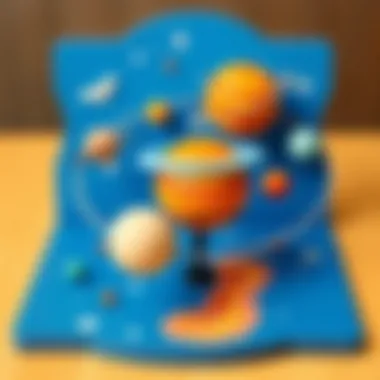
- Create a Solar System Model: Use balls of various sizes to represent planets and their distances from the sun.
Step-by-Step Instructions
- Building a model rocket involves designing a stable structure and securing a small engine. Then, launch it safely outdoors!
- For the solar system model, use a large ball for the sun and smaller balls to represent the planets - encourage measuring distances too.
Materials List
- For model rockets: paper, cardboard, soda straws, tape, small plastic bottle for propulsion.
- For solar system: balls of various sizes (or paper-mache), string, markers for labeling.
Safety Tips and Precautions
- Ensure a safe launch site for rockets away from people and buildings.
- Supervise children while using scissors or other tools for crafting.
Links for Further Exploration
Science is not only about facts and figures but also about imagining possibilities and exploring beyond known horizons. Let kids lead the way, nurture their inquisitiveness, and watch as they reach for the stars.
Preface to Space Science Fair Projects
Engaging with space science offers a pathway to understanding the vast universe beyond our reach. Science fairs, as a platform, provide young innovators an opportunity to showcase their creativity, critical thinking, and problem-solving skills through projects centered around this fascinating realm. These projects not only bolster scientific literacy but also ignite curiosity and foster a deeper comprehension of astronomical concepts, making the subject matter approachable for young minds.
Understanding the Significance
The significance of space science fair projects lies in their ability to bridge complex scientific ideas with simple, hands-on experiments. When children take part in these projects, they aren't just learning; they are exploring the essence of scientific inquiry. This exploration helps demystify concepts such as gravity, orbits, and the composition of celestial bodies. As kids get their hands dirty—whether it's building a model of the solar system or simulating how rockets launch—they actively engage in experiential learning. The skills gained extend beyond just science; they encourage teamwork and communication, essential tools for their future endeavors.
Furthermore, space science captures the imagination. The sheer thought of distant planets and stars prompts many to wonder about life outside Earth. Projects in this domain make science approachable and foster questions that can last a lifetime. It nurtures a generation inclined not only toward scientific pursuits but also towards innovative thinking applicable in various fields.
Target Audience and Purpose
This guide aims at children aged six to twelve, their parents, and educators seeking to encourage classroom or at-home learning experiences. The excitement surrounding space science can be contagious, inspiring both young learners and those guiding them. Parents can assist by providing encouragement, materials, and a safe space for exploration. For educators, introducing these themed projects can enliven existing curricula, allowing students to grasp abstract concepts through tangible tasks.
The primary purpose of this article is to facilitate a rich understanding of space science through project-based learning. By outlining various project ideas and methodologies, we shift the focus onto the students. The goal is to empower them to ask questions, seek answers, and, ultimately, contribute to our understanding of the universe. This spirit of inquiry reinforces the critical idea: fostering young innovators is essential for our scientific future.
Selecting the Right Project
When it comes to space science fair projects, choosing the right topic can make all the difference. This phase is not merely about picking an interesting theme; it sets the stage for the entire project. By selecting wisely, young innovators can explore something they’re passionate about, which increases their motivation and determination to delve deeper.
Identifying Interests
Before diving into the nitty-gritty, it’s crucial to reflect on personal interests. Kids are much more likely to engage with subjects that spark their curiosity. Do they have a fascination with the stars, a yearning to learn about rockets, or an interest in alien life?
To nurture this exploration, here are some tips:
- Ask Questions: Encourage them to ponder what they find most intriguing about space. Is it the vastness? The science behind black holes? Or perhaps the life cycle of stars?
- Explore and Discuss: Read books or watch documentaries about space. Sharing thoughts and ideas helps in narrowing down a direction.
- Hands-on Experience: Taking part in local planetarium events or science workshops can be eye-opening. Often, real-world experiences lead to project interests.
Ultimately, aligning the project with personal interests might just transform a simple science fair presentation into a genuine exploration of knowledge.
Educational Value
Every project should engender learning and development. It’s important to consider the educational aspects involved. Here’s why this matters:
- Enhancing Knowledge: The right project can deepen understanding of scientific principles, for example, through hands-on activities involving physics or chemistry.
- Skill Development: Working on a project fosters skills like research, problem-solving, and critical thinking. The process itself is as valuable as the end product.
- Connecting with Curriculum: A project that links to what is being taught in school will not only satisfy the academic requirements but also provide a context for learned concepts. For example, linking rocketry to physics lessons about force and motion can be enlightening.
Projects should not simply be about creating something pretty but should encourage the young minds to think critically about the universe.
Feasibility and Resources
After interests and educational value, it’s crucial to consider feasibility. This encompasses what is practically achievable within given constraints, such as time and available resources. Here are a few points to consider:
- Time Frame: Identify how much time can realistically be devoted to the project. Some projects require significant time for research and development, while others may need less.
- Access to Materials: Determine whether the necessary materials and equipment are readily available at home or school. For instance, a project involving chemical reactions might need special safety equipment or supplies.
- Support and Guidance: Having adults or mentors who can provide guidance can ease the learning curve. Look for local science clubs or online communities where enthusiasts meet.
Considering these elements beforehand will help steer the project into a manageable yet rewarding direction, ensuring that the young scientist remains engaged and enthusiastic throughout the process.
Project Ideas and Themes
The selection of project ideas and themes is crucial in the realm of space science fair projects. It not only shapes the direction of the scientific inquiry but also ignites passion and curiosity among young innovators. Selecting the right theme can lead to engaging discoveries, make learning enjoyable, and build foundational skills that are essential for future scientific endeavors. By focusing on various aspects of astronomy, students can explore the complexities of the universe while fostering critical thinking and creativity.
Modeling the Solar System
Creating a model of the solar system isn’t just about sticking planets on a board. It’s a hands-on way to learn about the scale of our celestial neighborhood, the distances between planets, and their unique characteristics. Choosing this project can help students grasp concepts like orbits, gravity, and even the composition of celestial bodies. Students can select different materials—like balls or clay—to represent planets, ensuring a fun and tactile experience.
Some additional points to consider include:
- Scale Models: Discuss the actual distances in space and how challenging it can be to represent them accurately.
- Planetary Characteristics: Research what makes each planet unique, such as rings around Saturn or the storms on Jupiter.
- Creative Presentation: Think outside the box—how about making a mobile that displays the solar system in motion?
Rocketry and Propulsion
When it comes to understanding the fundamentals of rocket Science, designing a simple rocket can be one of the most exhilarating projects. Rockery projects allow students to dabble in physics concepts like thrust, aerodynamics, and Newton's third law of motion. They can even experiment with various propulsion methods, using materials like vinegar and baking soda or creating bottle rockets.
There's a lot to explore with this theme:
- Experimentation: Adjusting sizes and weights can lead to unique results. Students can learn how to optimize for distance or height.
- Safety Precautions: Understanding safe practices when launching rockets can teach responsibility and careful planning.
- Presentation: Students could film their launches to share the excitement with others.
Planetary Landforms and Geography
A project focusing on planetary landforms can be enriching, as students can investigate the surfaces of other celestial bodies. By studying images from telescopes or space missions, they can replicate key features like craters, volcanoes, or canyons. This project combines geology with space science, leading to an engaging multidisciplinary approach.
Essential elements of this theme include:
- Research: Utilize resources like NASA’s website to find current data and images of various planetary surfaces.
- Replication: Using clay or 3D models to mimic geographical features offers a hands-on experience that enhances understanding.
- Analysis of Features: Discuss how these landforms compare to those on Earth, delving into processes like erosion and tectonics.
Astrobiology and Habitability
Astrobiology tackles the big questions: could there be life beyond Earth? This theme can spark fascinating discussions and research around what makes a planet habitable. Students can explore factors such as water presence, atmospheric conditions, and potential biosignature gases to craft presentations on their hypotheses about extraterrestrial life.
To enrich this project, students can:
- Study Extremophiles: Research organisms that live in extreme conditions on Earth to gain insights into potential alien life.
- Create Hypothetical Scenarios: Design a planet or moon that could support life and explain their features.
- Engage in Dialogues: Encourage interviews with teachers or experts to broaden perspectives on the topic.
Space Weather and Its Effects
Space weather, which includes solar flares, radiation, and magnetic storms, can dramatically affect our planet. A project investigating these phenomena can provide insights into how they impact technology, climate, and life on Earth. Understanding space weather is vital for future explorations and our reliance on technology.
A few considerations for this theme include:
- Research Current Events: Applying real-time data from sources like NOAA can make the project relevant and timely.
- Modeling Effects: Creating simulations or visualizations to demonstrate how space weather interacts with Earth’s atmosphere can add a dynamic element to the presentation.
- Assessment of Impacts: Discuss possible consequences of space weather, like disruptions in GPS and power grids, showcasing the relevance of their findings.
Engaging with these project ideas not only stimulates curiosity but also encourages critical thinking and problem-solving skills. Each theme offers an opportunity for young innovators to explore profound scientific concepts while having fun. The exploration of our universe offers a wealth of knowledge waiting to be uncovered.
Methodologies for Experiments
When it comes to space science fair projects, the methodologies employed for experiments are the backbone of the entire process. These approaches not only guide young innovators in their exploration but also ensure that their findings are credible and informative. By understanding various methodologies, children can engage in hands-on learning, develop critical thinking skills, and foster a genuine curiosity about the universe.
Hands-on Approaches
Getting one's hands dirty is often where the real learning happens. Hands-on approaches involve direct interaction with materials and processes, which can lead to deeper understanding and retention of knowledge. For instance, if a child decides to create a model rocket, they will not only learn about rocketry but also about physics principles such as thrust, lift, and aerodynamics.
Here are a few specific benefits of hands-on experiments:
- Encourages Creativity: Being actively involved allows children to think outside the box and come up with new ideas or modifications to enhance their projects.
- Promotes Collaboration: Working in teams to design and execute a project can enhance teamwork skills, teaching kids to share ideas and responsibilities.
- Builds Confidence: Successfully navigating through the steps of an experiment can bolster a child's self-esteem and sense of achievement.
Data Collection Techniques
Data collection is a crucial phase in any scientific method. Without gathered data, conclusions drawn on experiments might lack solid foundation. For space projects, data can take many forms, like measurements, observations, or even surveys. Having robust data collection techniques ensures that children can support their findings with factual information. Here are a few methods:
- Observational Studies: Closely watch celestial events, such as lunar phases or star formations, and record detailed notes.
- Surveys and Questionnaires: Engage family and friends to answer questions about space knowledge, thereby gathering varied perspectives.
- Experimental Measurements: For instance, while testing how different rocket designs affect flight, consistently measure altitude and time taken to reach it.
Analysis and Interpretation
Once data is collected, the next hurdle is making sense of it all. Analyzing and interpreting data involves taking the raw findings and turning them into something comprehensible and meaningful. This phase is where young scientists can either confirm or challenge their initial hypotheses. It's critical to approach this step with an open mind, as surprises are often part of the scientific journey.
Considerations for effective analysis include:
- Visual Representation: Using charts, graphs, or models can help to visualize data and make it easier to understand patterns or trends.
- Comparative Analysis: Children's findings should be compared against established scientific theories or past data to gauge their accuracy and significance.
- Reflection: Encourage kids to think about what their data reveals. What does it say about their project? Did it meet their expectations, or did they learn something unexpected?
"The essence of science is not a formal procedure but a critical spirit."
—Albert Einstein
By incorporating effective methodologies into their experiments, young innovators not only gain scientific knowledge but also develop essential life skills that can benefit them both academically and personally. Through hands-on approaches, diligent data collection, and thorough analysis, they can embark on an enriching journey through space science.
For further resources, visit
NASA's Classroom Activities or National Geographic Education.
Creating an Impactful Presentation
When it comes to presenting a project at a science fair, the way information is conveyed can make all the difference. A well-crafted presentation not only showcases a project but also engages the audience, making complex ideas more accessible. For young innovators, this means their hard work can shine through, capturing the attention of judges and spectators alike. Here, we will dive into the crucial components of creating a presentation that leaves a lasting impression.
Effective Visual Aids
Visual aids serve as the backbone of a successful presentation. Think of them as the shiny wrapper that draws people in, just like candy in a store. When used properly, they can clarify complex concepts and provide an enhanced understanding of the project. Here are some tips for crafting effective visual aids:
- Use Simple Graphics: Diagrams, charts, and photos should be easy to understand. For example, if presenting about the layers of the atmosphere, consider displaying a picture that clearly shows each layer’s characteristics.
- Limit Text: Too many words can overwhelm viewers. Instead, use bullet points to highlight key ideas without drowning the audience in information.
- Incorporate Colors Wisely: Color can grab attention, but too much can be distracting. Utilize a color scheme that complements the presentation without being gaudy.
"People remember visuals better than verbal explanations, so make sure your aids tell a story."
Having engaging visuals isn’t just about aesthetics; it actively encourages the audience to pay attention and process the information being presented.
Clear and Concise Messaging
Space projects often involve sophisticated concepts. Thus, squeezing them into tidy, digestible bits is essential. Presenters should aim for clarity without sacrificing depth. Here’s how:
- Use Everyday Language: Don’t pepper your speech with jargon. Instead of saying "photosynthesis in extraterrestrial organisms," you could say "how plants might grow on other planets." This makes it relatable.
- Structure Your Presentation: Start with a hook, introduce your project, explain its significance, and wrap up with a conclusion. Having a clear structure helps the audience follow along.
- Practice, Practice, Practice: The more one rehearses, the clearer the message will become. Practicing not only builds confidence but also ensures that explanations remain succinct and to the point.
The goal is to convey information effectively and keep the listeners engaged from start to finish.
Engaging with the Audience
Understanding how to engage with an audience is key in making any presentation stand out, especially when discussing topics as appealing as space science. When young innovators present their projects, they are not just sharing facts but also sparking curiosity and interest. Engaging with the audience means creating a connection and inviting them into the fascinating world of space exploration. This article emphasizes the importance of engaging presentation elements that create lasting impressions, making learning fun and effective.
Interactive Demonstrations
One of the most effective ways to engage an audience is through interactive demonstrations. This hands-on approach can light up the faces of young spectators and draw them into the experience. Rather than just explaining concepts, children can actively participate in experiments or simulations.
For instance, if a project is based on the solar system, a young innovator can use a simple model that shows how planets orbit the sun. By having audience members help position the planets, the presenter allows them to feel the mechanics of celestial movement. Using everyday materials can make this even more relatable and exciting.
Benefits of interactive demonstrations include:
- Enhanced Understanding: Audiences comprehend complex topics better when they see and do rather than listen.
- Increased Retention: When participants are engaged physically and mentally, they are likely to remember the material longer.
- Fostering Collaboration: Working together on an experiment encourages teamwork and communication skills among young learners.
However, it is essential to plan these demonstrations carefully to maintain flow and ensure safety. The project presenter should have a clear idea of what they want the audience to learn and how the demonstration fits into the overall narrative.
Q&A Sessions and Discussions
After a presentation and demonstration, a well-structured Q&A session is crucial for deeper engagement. It invites the audience to act as active participants in the learning process. This element does not only clarify doubts but also stimulates further exploration and discussion.
During Q&A sessions, young innovators should:
- Encourage Questions: Creating an open space for inquiries allows the audience to express their curiosity. It’s a way for them to share what piqued their interest or what they find confusing.
- Promote Thoughtful Discussion: Introducing open-ended questions can lead to fascinating conversations. Instead of straight answers, kids can discuss possibilities, theories, and even ask their peers for answers.
- Adaptability: Being prepared to answer a range of questions shows that the presenter has a strong grasp of their topic. Sometimes, kids might even surprise the presenter with their unique insights!
"Encouraging participation increases the depth of understanding and excitement for space science projects."
In these discussions, innovators can shift from a teacher-student dynamic to a facilitator-learner setup, enhancing the overall experience.
Engaging with an audience through interactive demonstrations and thoughtful Q&A sessions creates an atmosphere of curiosity and excitement. This not only makes the presentations memorable but also nurtures a love for space science in young minds.
Evaluating Project Success
Evaluating the success of a space science fair project is crucial for young innovators, as it sheds light on not just the project's outcome but also the learning process. When aspiring scientists take the time to assess their projects, they begin to understand what worked, what didn’t, and how they can improve in their future endeavors. Each element of evaluation, whether it’s feedback or self-reflection, contributes to a holistic picture of their learning and achievement. By fostering these evaluation skills, children can become more adept problem-solvers and critical thinkers, which are invaluable traits as they journey through their educational paths.
Feedback from Judges
Feedback from judges acts as a guiding star in the galaxy of academic exploration. Engaging with judges provides students a chance to grasp how their project was perceived. Here are a few key points to keep in mind:
- Constructive Criticism: Judges often provide insightful comments that highlight strengths and areas for improvement in the project. This is a golden opportunity to learn.
- Understanding Expectations: Through the judges’ responses, students can better understand the expectations for scientific projects. Knowing this can fine-tune their approach in future projects.
- Validation of Efforts: Positive feedback can serve as validation, reinforcing the students' dedication and making them want to dive even deeper into science.
Feedback isn’t just about finding fault; it’s about growth. Turning what might seem like failures into lessons can greatly enhance a young innovator's confidence and capabilities.
“Feedback is the breakfast of champions.” – A reminder that every comment, even if it stings a bit, is a chance to elevate one’s work to a new level.
Self-Assessment Techniques
Self-assessment techniques are a vital part of evaluating a project’s success, allowing innovations from young minds to resonate within. Here’s how to carry out self-assessments:
- Create a Checklist: Kids can outline the project's goals and whether each was met. Asking questions like “Did I explain my concept clearly?” or “Have I used adequate resources?” can guide their reflection.
- Reflective Journaling: Encourage students to maintain a journal throughout their project journey. Writing about their progress, ideas, and setbacks fosters personal reflection and creates a record of their learning.
- Peer Input: Getting feedback from friends or family can also be a useful tool for self-assessment. Sometimes, fresh eyes catch things that the creator may overlook.
- Present and Reflect: After presenting their project, students should take a moment to reflect on what went well and what didn’t. This could help in identifying gaps that could be filled in similar future projects.
Encouraging young innovators to engage in self-assessment helps them build critical evaluation skills that will benefit them long beyond the science fair. It makes them active participants in their learning journey rather than passive recipients of feedback.

Incorporating STEM Principles
In today's fast-paced world, young innovators must grasp the significance of STEM, which encompasses Science, Technology, Engineering, and Mathematics. Integrating these principles into space science fair projects not only enriches the learning experience but also cultivates crucial skills that help kids tackle future challenges. By understanding how these areas interconnect, children can develop a deeper appreciation for the universe and enhance their problem-solving abilities.
Science Integration
Science education forms the backbone of STEM, allowing young learners to explore the fundamental principles behind the cosmos. Whether it’s studying gravitational forces, examining planetary geology, or understanding the physics of light, science integration can be effectively utilized in projects. Here are some ways to maximize scientific understanding:
- Hands-on Experiments: Encourage children to conduct experiments related to gravity by creating models of planets or simulating the effect of different forces in space.
- Research Projects: Children should be taught to use credible sources to dive deeper into topics like the life cycle of stars or the impact of asteroids on Earth. Websites like britannica.com and nasa.gov are excellent starting points.
- Field Studies: Visiting planetariums or science museums can inspire and provide real-world context to their projects.
Incorporating these elements fosters not just curiosity but also critical thinking. It pushes kids to question how and why things work the way they do.
Technology Use in Projects
Technology is a vital component of modern education. It can enhance experiments and presentations, providing innovative methods for young learners to express their findings. Here are some smart ways to integrate technology into space science projects:
- Data Analysis Tools: Teach children to use software or apps for analyzing data collected from their experiments. Programs like Excel or Google Sheets can make it easier to visualize results.
- Multimedia Presentations: Encourage kids to use video editing, presentation software, or even simple graphics tools to create visual content for their project displays. Platforms like Canva or Prezi allow for creative expression.
- Simulation Software: Utilize tools such as Universe Sandbox to simulate astronomical events. This can give kids a fun way to grasp complex concepts like orbits and celestial mechanics.
Using technology not only makes projects engaging but also prepares kids for a tech-oriented future.
Mathematics in Space Science
Mathematics is often seen as a daunting subject, but in reality, it plays a crucial role in understanding space science. Incorporating math into their projects can help kids appreciate its relevance. Here are ways to utilize math effectively:
- Measurements and Calculations: Young scientists can learn to measure and calculate distances in the solar system, requiring them to use basic units of measurement and perform conversions.
- Graphs and Charts: Integrating graphical data representation can help kids understand trends, such as comparing the sizes of different planets or charting the orbits of celestial bodies.
- Problem-Solving Activities: Create math challenges related to space questions, like calculating how long it would take to travel to Mars based on current rocket speeds. This engages kids in practical applications of their math skills.
Ultimately, weaving math into space science not only illustrates its significance but also enhances analytical and logical thinking.
"Connecting STEM principles to real-world applications fosters a love for learning and encourages young minds to think critically and innovatively."
Through this integration of STEM principles in space science fair projects, children will not only learn about the universe but also develop valuable skills that will serve them well in their academic and future careers. By fostering curiosity and creativity, we prepare them to become the innovators of tomorrow.
For further exploration into the exciting world of STEM in education, check out: National Education Association, STEM.org, or visit engaging tutorials at platforms like Khan Academy.
Future Trends and Innovations
The realm of space science is continually evolving, with fresh innovations and groundbreaking technologies shaping how we explore the universe. Understanding these future trends is central to this article, as it not only sparks the imagination of young innovators but also equips them with knowledge of the ever-changing landscape of space exploration. As we delve into the topic, we will shine a light on two important aspects: emerging space technologies and the critical role that youth play in these developments.
Emerging Space Technologies
As we step further into the 21st century, a slew of exciting technologies are coming to the fore, changing how we view our universe. The advent of things like miniaturized satellites, more commonly referred to as CubeSats, has revolutionized space research. These compact satellites are affordable, lightweight, and can be deployed in groups to gather extensive data. This means that kids working on their space science projects can think big, using these concepts for their own experiments.
Consider, for instance, the use of 3D printing in constructing spacecraft parts. This technology allows for rapid prototyping and is becoming a game changer in the way we build spacecraft. What's fascinating is that students might even explore this concept in their projects, perhaps creating models to show how advances in materials could enable longer space missions.
Furthermore, advancements in artificial intelligence are making machines capable of performing complex space tasks that humans once handled. In fact, robots are now able to analyze data from space missions, detect anomalies, and even assist in conducting experiments on the International Space Station. Kids can think about how they might incorporate teaching AI into their projects, such as creating a simple robot to model how machines can contribute to space exploration.
"The future belongs to those who believe in the beauty of their dreams."
—Eleanor Roosevelt
The Role of Youth in Space Exploration
When it comes to future advancements, there’s nothing more critical than the involvement of young minds. Children today are the next generation of scientists, engineers, and innovators who will shape space exploration in the years to come. By engaging in space science projects, they not only nurture their curiosity but also gather essential skills that can be applied in various fields.
Organizations like NASA have recognized the importance of youth in their initiatives. For example, NASA's Artemis program invites students to participate by brainstorming ways to sustain life on the Moon and Mars. This is a clear invitation for the younger generation to get involved and voice their ideas.
Additionally, community programs often provide avenues for aspiring young scientists to work on projects that align with what professionals are doing in the field. This means that children stand a chance to co-create solutions that could tackle real issues, from improving telescope technology to understanding climate change from a cosmic perspective.
In summary, the future of space science is not just a matter of technological innovation; it’s also about fostering a culture where young minds feel empowered to contribute meaningfully to exploration. By supporting children in their projects, encouraging their questions, and providing resources, we enable them to dream and, more importantly, take steps toward making those dreams a reality.
Supporting Resources
Supporting resources play a pivotal role in the journey of young innovators as they embark on their space science projects. Having access to well-curated materials not only enhances understanding but also inspires creativity. Whether it’s through engaging books, interactive webinars, or online courses, these resources can ignite the spark of curiosity and provide the necessary tools to explore complex topics effectively.
Books and Literature
Books are windows to the universes of knowledge, where young minds can find treasures of information. Age-appropriate literature about space science can nurture a child’s fascination with astronomy and related fields. Illustrated books with vibrant images of galaxies or detailed explanations of rocket propulsion can transform boring facts into colorful stories.
When choosing books for children aged six to twelve, consider the following:
- Illustrations and Visuals: Young readers often connect better with books filled with engaging pictures and diagrams that contextualize dense information.
- Interest Level: Select books that align with the child's interests. If they are fascinated by planets, explore books specifically discussing planetary science, like "There’s No Place Like Space" by Tish Rabe, which introduces concepts in a kid-friendly manner.
- Activity Books: These can include hands-on projects, like creating model rockets or conducting simple experiments at home. An example is "NASA Scientists Explore" series, which involves fun explanations alongside activities.
In a nutshell, books provide young innovators with the opportunity to learn at their own pace while enriching their project ideas.
Webinars and Online Courses
With the digital era blooming, webinars and online courses have emerged as vital resources in the toolkit of aspiring young scientists. These platforms offer a wealth of knowledge and real-time engagement with experts in the field.
- Interactive Learning: Many online sessions include live demonstrations or Q&A segments. This interaction enables students to clarify doubts in real-time. For instance, NASA offers free online learning workshops that teach youngsters about various space missions and discoveries.
- Flexibility and Accessibility: Unlike traditional classrooms, online platforms provide the flexibility to learn at one’s own pace. Children can revisit recordings of past webinars if they find any topic particularly challenging.
- Hands-on Experience: Some courses may include modules where young innovators can submit projects for feedback, enabling them to refine their ideas or approaches based on professional critiques. Websites like Coursera and edX offer courses on astronomy that often cater to all ages.
"Since we cannot change the reality of space science, we strive to broaden our understanding through resources, allowing us to explore it in engaging and effective ways."
Relevant Links
- NASA Learning Resources
- NASA Kids Club
- Coursera Astronomy Courses
- edX Astronomy Courses
- Goodreads - Best Space Science Books for Kids
Each of these resources not only supports the project development process but also invites children to explore the wonders of space, one page or one course at a time.
Final Thoughts
In closing, the realm of space science fair projects offers a treasure trove of learning opportunities for young minds. This section aims to reinforce the overall essence of the article, emphasizing not just the importance of the projects themselves, but also the underlying values they promote. Engaging in these experiments can ignite a sense of wonder, inspire critical thinking, and encourage a proactive approach to problem-solving. The tools and methodologies discussed throughout this guide serve as a foundation, guiding young innovators toward meaningful exploration of the universe.
As children undertake their space-themed projects, they become mini-scientists, diving into fascinating realms of knowledge. They learn to ask questions, hypothesize, and ultimately understand the scientific method on a deeper level. This hands-on experience enhances their academic skills and nurtures an enthusiasm for science that can last a lifetime.
The rewards of participating in a science fair extend beyond just accolades. Kids develop communication skills as they present their findings, confidence in their abilities, and a lasting sense of curiosity about the world around them. Families play a crucial role in this journey, offering support and encouragement, ensuring that the projects remain a source of joy rather than stress.
Encouragement to Explore
Encouraging young minds to explore space science projects goes hand in hand with fostering creativity and innovative thinking. For many children, space is a vast, unexplored frontier, full of mysteries just waiting to be uncovered. When parents and educators encourage them to experiment, they open the door to countless possibilities. The excitement of launching a model rocket, creating a planetarium, or investigating the effects of solar activity can transform abstract concepts into tangible realities.
This encouragement is vital to help children develop resilience. Failures, whether it's a rocket that doesn't launch or a model that doesn't turn out as planned, are lessons in disguise. These experiences teach the importance of perseverance, allowing children to see setbacks as stepping stones rather than barriers. As they learn to adapt and refine their projects, they realize that innovation often arises from trial and error.
Embracing Curiosity
Curiosity is the driving force behind every scientific discovery, and in the context of space science, it’s more important than ever. Encouraging children to embrace their innate inquisitiveness about the cosmos can lead to profound learning experiences. Asking why the stars twinkle, how planets are formed, or what conditions might allow life on distant worlds paves the way for rich explorations.
Parents can nurture this curiosity by engaging in discussions, visiting planetariums, or exploring starry skies together. The world of space is filled with captivating stories and wondrous phenomena, and sharing these can fuel a child’s desire to learn more. Encouraging them to keep a science journal, where they note down questions and findings, can also be a fantastic way to cultivate a habit of inquiry.
Moreover, supporting a child's curiosity allows them to explore topics beyond the confines of formal education. This culture of exploring space science projects helps create a learning environment where the journey is just as valuable as the destination. As children take every opportunity to ask questions and seek answers, they not only broaden their horizons but also enrich their understanding of the universe.
"Curiosity is the driving force behind all great discoveries."
In summary, the journey into space science projects sets the stage for a lifetime filled with wonder and exploration, urging young innovators to keep their eyes on the stars.