Creative Approaches to Inspire Young Scientists

Intro
Teaching science to young learners can often feel like trying to catch lightning bugs in broad daylight. The curiosity is there, but it's about harnessing that sparks of interest and channeling it into meaningful and fruitful explorations. Science is all around us; from the way birds glide through the sky to the tiny ecosystems thriving beneath a rock. However, turning these observations into structured learning experiences can be a tough nut to crack.
In this article, we’ll dive into a myriad of innovative ideas that transform the typical science classroom into an engaging wonderland. With creativity at the helm, teachers, parents, and caregivers can create a rich educational environment that ignites curiosity and passion for discovery. The following sections will provide a treasure trove of concepts, experiments, and activities tailored to captivate the young minds of children aged six to twelve.
Creating an Interactive Learning Environment
Creating an interactive learning environment is more than arranging desks or setting up gadgets; it's about forging a space where students feel comfortable exploring, questioning, and engaging with scientific concepts. Such an environment can be a game changer in how young learners approach science. A vibrant classroom can motivate students to dive deeper into topics, fostering a sense of curiosity and a love for knowledge. This section will outline how flexible classroom layouts, technology integration, and designated exploration zones work together to create an interactive atmosphere that encourages hands-on learning and collaboration.
Flexible Classroom Layout
A flexible classroom layout isn’t just about movable desks. It’s about crafting a physical space that promotes interaction among students. Imagine a classroom designed with different stations: a reading nook, a group work area, and an experiment zone. This arrangement can cater to various learning styles. Some students may thrive on active discussion, while others might prefer solitary study.
Also, think about arrangement strategies. Desks in clusters can stimulate group discussions, while a circular seating might encourage class-wide engagement. Keeping pathways clear for movement allows students to flow between activities without interruption. Remember, a well-planned layout can remove barriers, making science feel less like a chore and more like an exciting adventure.
Incorporating Technology
Gone are the days of chalkboards and overhead projectors as the only tech tools in education. Incorporating technology in the classroom opens a treasure trove of resources that can enrich lessons and cater to diverse interests. Cloud-based platforms allow students to collaborate on projects in real-time, even from home. Virtual reality tools offer immersive experiences, such as exploring the depths of the ocean or the surface of Mars, right from their classroom.
Furthermore, using simulations can convert abstract science concepts into tangible experiences. For instance, students can use software to model chemical reactions or explore biological processes through interactive diagrams. With the right tech, the classroom becomes a dynamic hub where science transforms from theory into practice.
Designated Exploration Zones
Establishing designated exploration zones within the classroom invites students to take charge of their learning. These zones can serve various purposes, such as a space for materials to examine specimens or a mini-lab for conducting simple experiments. These areas should be stocked with supplies, such as magnifying glasses, models, or natural items like rocks and plants, to enrich the exploratory experience.
Moreover, exploration zones encourage students to engage with science on their terms. When given time to play with different materials or conduct their experiments, they learn through trial and error. This hands-on approach not only deepens their understanding but also instills critical thinking skills as they begin to analyze outcomes.
Creating a stimulating environment not only enhances learning but nurtures a generation of inquisitive minds, eager to discover and innovate.
Hands-On Experiments
Hands-on experiments represent a cornerstone of scientific education, especially for young learners. These activities provide students an opportunity to step away from traditional lectures and dip their toes into the scientific method. The idea is to foster a sense of inquiry through direct engagement with the material, making abstract concepts feel more tangible. Not only do hands-on experiments enrich learning, but they also cater to various learning styles, which is vital when teaching a diverse classroom.
Engaging in hands-on experiments allows students to develop essential skills such as critical thinking, problem-solving, and teamwork. When students physically interact with materials, they often build a more profound understanding and retention of scientific principles. The tactile experience of manipulating objects makes learning memorable, which ultimately aids in laying a solid foundation for lifelong scientific inquiry.
"Learning is a treasure that will follow its owner everywhere."
Simple Science Projects
Simple science projects offer an accessible entry point for students, particularly those who may feel daunted by more complex topics. Projects like growing crystals in a saturated solution or creating a small volcano using baking soda and vinegar turn basic principles of chemistry into something kids can see and interact with. These activities don’t require an extensive knowledge base; they provide instant gratification and spark curiosity.
To execute a project like the crystal-growing activity, educators can follow these straightforward steps:
- Materials: Start with sugar, a jar, and water.
- Procedure: Heat the water until it’s warm but not boiling, then dissolve the sugar in it until no more will dissolve.
- Growth Process: Pour the solution into a fresh jar and let it sit undisturbed. Over days, crystals will form, visually demonstrating super-saturation and crystallization.
This project not only illustrates scientific concepts but allows kids to take ownership of their learning journey.
Nature-Based Experiments
Nature provides a unique backdrop for scientific exploration. Nature-based experiments—such as observing local plant growth or animal behaviors—allow students to connect with the environment. Such experiments encourage students to become keen observers, noting how external conditions influence living organisms.
For instance, a simple activity can involve students tracking the growth of plants under varied conditions:
- Sunlight vs. Shade: Place two identical plants in different light conditions.
- Watering Techniques: Use different amounts of water on separate plants and note the outcomes.
As students conduct these experiments, they learn about ecology, biology, and even weather patterns. Incorporating nature allows for a richer context, promoting environmental stewardship and curiosity.
Recycled Materials in Science
Using recycled materials in science experiments is both economical and environmentally friendly. Items such as old bottles, cardboard, and discarded electronics can be repurposed to create exciting learning projects. This approach not only emphasizes creativity but also teaches students about sustainability and resource management.
For example, conducting a project on renewable energy can be as simple as constructing a small wind turbine using a plastic bottle, straw, and a small motor. By doing so, students can visualize how wind energy is converted into electricity.
Here are some extra ideas for using recycling in science:
- Homemade Water Filters: Teach about filtration by building a basic filter using sand and gravel from old bottles.
- Solar Ovens: Create a solar cooker with a pizza box and aluminum foil, demonstrating the greenhouse effect.
This combination of science and environmental consciousness illustrates that learning can be both innovative and sustainable, thus reinforcing the notion that scientific discovery has direct implications for real-world issues.
By embracing hands-on experiments, educators introduce an interactive dimension to science learning that resonates deeply with children and helps develop their ability to think critically and creatively.
Thematic Science Units
Thematic science units are a powerful approach in the classroom, bringing together various scientific disciplines under specific themes that resonate with the interests and experiences of young learners. Such units encourage students to make connections, fostering a more integrated understanding of science rather than isolating subjects into silos. They nurture critical thinking and application of scientific concepts in real-world scenarios, ultimately promoting an enthusiasm for science.
Exploring Ecosystems
Ecosystems are a fundamental part of science education, especially for young learners. By delving into this topic, students can discover not just the living organisms present but also the intricate relationships between them and their environment. Lessons can include local ecosystem explorations, fostering an understanding of biodiversity and the importance of conservation. For instance, taking a field trip to a nearby nature reserve allows students to observe plants and animals in their habitats.
Here, they'll learn about food webs, energy flow, and the impact of seasonal changes on ecosystems. To enhance their curiosity, educators could encourage students to create their own miniature ecosystems using jars, soil, plants, and small creatures. This hands-on experience reinforces lessons about ecosystems while giving students a visual and tangible understanding of the concepts.
Physics of Everyday Life
This unit bridges the gap between classroom theory and daily experiences. In a world where physics impacts every moment, children can learn the physics behind everyday objects and phenomena. By exploring concepts like motion, gravity, and force using familiar examples—a ball dropping, a bike rolling down a hill, or even a cup of coffee cooling down—students can relate the scientific principles to what they see around them.
A practical approach could involve sticky-note challenges in which students predict outcomes based on physical laws and then test their predictions. These activities enhance learning by allowing students to observe and analyze real-world physics, ensuring abstract concepts become much more tangible.
Chemistry for Kids
Chemistry is the science of matter and its changes, and it can be surprisingly engaging when presented appropriately. The key is to let kids experiment with the chemistry around them—whether through simple reactions in their kitchens or fascinating demonstrations in the classroom. Teachers might introduce them to the marvels of acids and bases using common substances like vinegar and baking soda, igniting excitement with fizzing reactions and colorful microscope slides depicting what those substances look like.
Creating a 'kitchen chemistry' unit could involve students following easy recipes to make slime or homemade crystals. They can keep journals to document their progress and results, making chemistry as relatable as baking a cake. Exploration through hands-on activities helps demystify chemistry and shows students that it's all about trying out mixtures and understanding that science truly is all around them.
"Thematic units integrate various aspects of science, making learning not only informative but a joy for students."
Collaborative Learning
Collaborative learning stands as a pillar in modern science education, offering a pathway to engage students deeply. When children work together, they don't just share ideas; they create a dynamic environment filled with discovery. Group settings allow for diverse perspectives, fostering creativity and critical thinking skills. Students learn the value of teamwork, negotiating challenges and solving problems that arise during collaborative tasks. This mode of learning mirrors real-world scenarios, making it particularly relevant.
Moreover, when students brainstorm as a group, they feel a sense of belonging. This connection boosts their confidence and encourages them to voice their opinions without fear of being judged. Group activities can also spark healthy competition, pushing peers to motivate each other and strive for excellence.
In summary, by embracing collaborative learning, educators open the door to a richer, more interactive experience in the science classroom.
Group Projects and Presentations
Group projects can seem daunting, but they serve as an excellent means to bolster learning. Students can be divided into teams, each tackling different components of a scientific topic. For instance, one group might research the life cycle of a frog, while another might focus on its habitat. These projects enable a division of labor and a chance for each student to shine in their area of interest.
Each group can then present their findings, using visual aids such as posters or digital slides. This not only helps solidify their understanding but also enhances their communication skills, as they practice explaining complex concepts to their classmates. The peer-to-peer teaching aspect of presentations is powerful – students often explain things to one another in ways that resonate more than traditional teaching might.
Peer Teaching
Peer teaching takes learning to another level, turning students into educators. This method encourages older or more knowledgeable students to explain concepts to their peers. Imagine a sixth grader breaking down the principles of gravity for their classmate – the informal nature can make tough topics more approachable.
Implementing peer teaching could involve structured sessions where students teach mini-lessons, or it could be more spontaneous during group work. It’s vital for instructors to set the stage, ensuring that students know how to guide each other effectively. Empathy and patience become crucial traits developed through this process. As students teach and learn from each other, they enhance their mastery of the subject.
Science Club Initiatives
Science clubs offer a fun outlet for students to explore wider scientific themes outside the typical classroom structure. These clubs can foster a love for science, turning curious minds into passionate individuals. Hosting regular meetings centered on specific themes, like astronomy or marine biology, allows students to delve deeper into their interests.
Consider organizing hands-on initiatives, like field trips to local science fairs or inviting guest speakers to present on exciting topics. Supporting collaborative projects within the club encourages students to form friendships, solidifying their commitment to learning. By working together, they embark on fascinating experiments, producing unique projects that can be showcased during science nights or community events.
Ultimately, science club initiatives empower students to take charge of their learning while nurturing a collaborative spirit.
Collaboration is the heartbeat of an innovative science classroom. Whether through group projects, peer teaching, or club initiatives, the benefits extend beyond knowledge acquisition, instilling crucial soft skills in our future leaders.
Connecting Science to Real Life
Connecting science to everyday experiences is crucial in igniting curiosity and fostering understanding among young learners. When children see the relevance of scientific concepts in their daily lives, they become more engaged and enthusiastic participants in their learning journey. This connection bridges the gap between theoretical knowledge and practical application, allowing children to grasp complex ideas more effectively. Moreover, it encourages them to explore, question, and develop a keen observation of the world around them.
Incorporating real-life elements in science education provides numerous benefits:
- Enhanced Engagement: When students can relate science to their own lives, their interest in the subject significantly increases.
- Critical Thinking: Real-life applications encourage students to think critically and assess situations based on learned principles.
- Increased Retention: By linking concepts to familiar contexts, students are more likely to remember and apply what they've learned.
- Broader Understanding of Impact: Students come to understand how scientific principles affect not just their lives but also the community and the environment.
Thus, fostering this connection is not merely a luxury but a necessity for developing informed future citizens who are mindful of the scientific reality surrounding them.
Field Trips to Local Science Centers
An excellent method to connect science to real life is through field trips to local science centers. These excursions provide students with hands-on experiences that textbooks often cannot convey. For example, visiting a local planetarium can give students a chance to learn about astronomy in an immersive environment, watching projections of stars and planets rather than simply learning from images.
Field trips can offer a range of benefits:
- Direct Interaction: Students interact with exhibits, experiments, and professional educators, making the science concepts come alive.
- Visual and Kinesthetic Learning: Engaging in activities at science centers can cater to different learning styles, ensuring that visual and hands-on learners grasp concepts effectively.
- Real-World Applications: These environments show how science is applied in various fields, inspiring students to consider future careers in science.
Guest Speakers from Scientific Fields
Bringing in guest speakers from scientific fields offers another enriching layer to connecting science with real life. Imagine the excitement of students when a local biologist or engineer walks into the classroom to share their experiences and expertise!
Guest speakers can:
- Provide Insight: They share stories about their work, revealing how science is applied in real life and answering students' questions directly.
- Inspire Future Aspirations: Hearing about careers in science can motivate students to pursue similar paths, revealing that science is not just about experiments in a lab but comprises a variety of exciting professions.
- Promote Community Involvement: Inviting local professionals establishes a connection between the classroom and the community, providing a tangible sense of support for young learners.
Community Science Projects
Community science projects take the notion of connecting science to real life one step further by engaging students in projects that have tangible benefits for their environment. Whether it's a local cleanup effort or biodiversity study in the neighborhood, these projects empower kids to apply scientific thinking directly to their communities.
Benefits of these projects include:
- Hands-On Experience: Students get to see the results of their efforts, whether through improved parks or better local wildlife understanding.
- Collaboration Skills: Working alongside peers instills teamwork, communication, and leadership skills.
- Sense of Ownership: When students feel they can make a difference, they become more invested in their learning.
Activating students' sense of responsibility and connection to their surroundings through these projects not only enhances their learning experience but cultivates a generation of informed and conscious citizens.
"Science is not only a discipline of reason but, also, one of romance and passion." — Stephen Hawking
By focusing on these real-life connections in science education, we're setting the stage for lifelong curiosity and responsibility among our youth.
Enhancing Observation Skills
Incorporating strong observational skills into the science classroom is pivotal for young learners. By honing these skills, children not only learn how to gather information effectively but also develop critical thinking capabilities that serve them throughout their educational journey. Observation acts as the backbone of science; it’s the first step in asking questions and seeking answers about the world around us. Improving these skills cultivates a sense of curiosity and a deeper comprehension of scientific principles, making learning meaningful and engaging.
Nature Walks and Observational Studies
Nature walks provide an invaluable opportunity for students to engage with their surroundings actively. When children step outside, they enter an open classroom filled with a rich tapestry of sights, sounds, and textures ready to be explored. Encourage students to observe various elements, whether it’s the flutter of a butterfly, the texture of tree bark, or the way sunlight dances on water. These experiences allow them to practice focusing their attention on details that might otherwise go unnoticed.
While walking, students can fill out simple observation sheets that prompt them to note colors, shapes, and any patterns they see. For example, they might be tasked to find:
- Five different types of leaves,
- Three colors of flowers,
- Two insects buzzing about.
This simple exercise transforms their everyday environment into a laboratory for experimentation and discovery.
Journaling Scientific Discoveries
A personal science journal can be a student’s best friend. This tool serves as a canvas for young explorers to jot down thoughts, questions, and findings from their experiments or observations. Journaling allows children to reflect on what they've seen and done. It helps to reinforce their memory of scientific concepts and encourages them to articulate their thoughts.
Young learners might be encouraged to:
- Draw diagrams of their observations,
- Write about their feelings during experiments,
- Pose new questions that arise.
The act of writing and drawing establishes a dialogue between the child and their scientific journey, fostering long-term retention of their learnings.
Utilizing Visual Aids and Models
Visual aids and models can be powerful companions in enhancing observational skills. When students can see a concept represented visually, it can solidify their understanding and aid in retention. For instance, using models of ecosystems, the water cycle, or the solar system allows students to visualize complex systems in a more digestible format.
- Posters around the classroom can illustrate key terms and concepts, serving as constant reminders of what they are learning.
- Hands-on models, like a physical representation of a plant cell, provide tactile experiences that deepen comprehension.
- Charts and graphs can help students track their observations over time, promoting a sense of progress in their scientific journeys.
By integrating these tools, educators can elevate their students’ observational skills, enabling them to connect theory with practice.
"Observation is the gateway to discovery. By cultivating the habit of looking closely, we open our minds to the wonders of the universe."
Using these strategies in the classroom not only enriches the learning experience but also fosters a community of inquisitive minds ready to explore the sciences further.
For further reading on the importance of observation in science education, you can refer to resources like Britannica.com or Wikipedia.
Incorporating Art into Science
The intersection of art and science may seem like an unlikely pairing to some; however, when combined, they open doors to creativity that enhance learner engagement and deepen understanding. Incorporating art into science fosters not just a richer learning experience, but also helps children develop critical thinking skills. Allowing kids to express themselves artistically while exploring scientific concepts can stimulate curiosity and encourage innovative problem-solving. Moreover, when science is communicated through art, it often becomes more relatable and digestible for young minds.
Scientific Illustration Projects
Artistic illustration allows students to visually interpret scientific concepts. Imagine a child illustrating the life cycle of a butterfly in a vibrant, detailed drawing. This project not only teaches them the stages of development but also enhances their appreciation for nature's beauty.
When embarking on a scientific illustration project, teachers can guide students through various steps:
- Choose a Topic: Selecting a concept like the human body or animal habitats can be exciting. This phase encourages exploration.
- Research: Encourage children to gather information about the chosen subject.
- Sketching: Start with rough drafts. This phase can be immensely rewarding as it allows students to brainstorm ideas.
- Final Illustration: Using watercolors or colored pencils, students can bring their sketches to life. This not only builds their artistic skills but also reinforces their scientific knowledge.
By integrating art into their learning, students gain a more comprehensive understanding of scientific phenomena and develop a sense of ownership over their projects.
Creating Visual Representations of Data
Visual data representation transforms complex information into something manageable and understandable. Graphing experimental results or creating infographics enables students to express their findings compellingly.
- Start Simple: Begin with straightforward data, such as class results from a plant growth experiment, allowing children to visualize growth over time.
- Tools: Use graph paper for bar graphs or pie charts, or even digital tools to create eye-catching presentations.
- Presentation: Encourage students to present their visual representations to the class. This enhances communication skills and fosters a sense of accomplishment.
Visual data representation doesn't just enhance comprehension but also develops skills necessary for interpreting information in real-world situations.
The Science of Color and Light
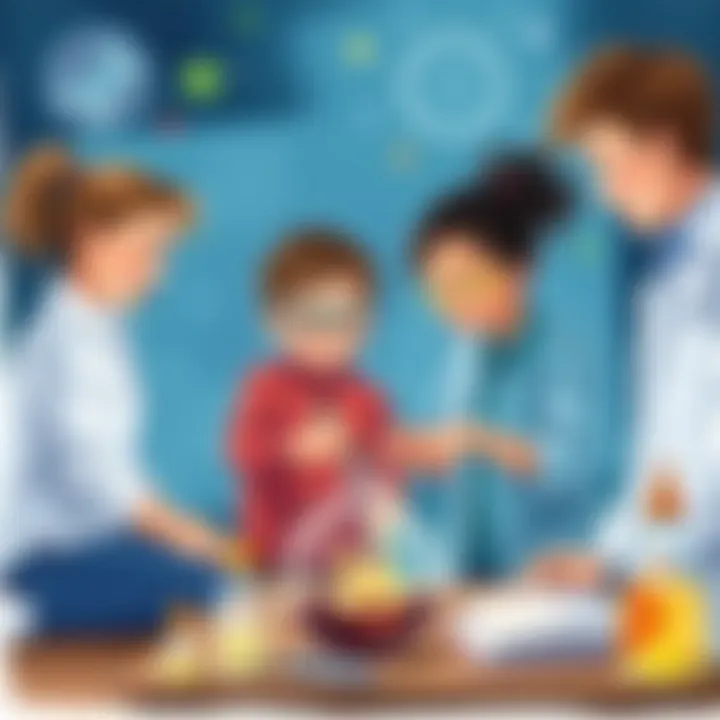
Understanding color and light opens a world of scientific wonder. Through art, children can explore these concepts visually and practically. One of the core activities could be creating a color wheel or experimenting with prisms to see light split into a spectrum.
- Color Mixing: Teach students about primary, secondary, and tertiary colors. Using paint, kids can mix these to create their own colors, demonstrating how light affects what we see.
- Prism Experiments: Using simple prisms allows children to observe how light can be separated into colors, engaging their sense of wonder.
- Shadow Play: Enable kids to explore how colors change under different lighting conditions, leading to discussions around light sources.
Engaging children in the science of color and light instills a sense of curiosity and excitement, encouraging them to observe the world around them in fresh ways.
"Art is a way of knowing, and science is a way of questioning; together, they create a tapestry of understanding."
Through these activities, not only do students explore significant scientific concepts, but they also learn to see connections between diverse fields, nurturing a holistic educational experience. Art can serve as a powerful vehicle for understanding science, making learning dynamic and interactive. By creatively integrating these two disciplines, educators can inspire the scientific thinkers of tomorrow.
Fostering Inquiry-Based Learning
Fostering inquiry-based learning is pivotal in any science classroom, right from its roots to its branches. This approach is all about encouraging students to ask questions, explore the natural world, and delve into the scientific process. Think of it as planting a seed of curiosity; if you nurture it with inquiry, it will grow into a robust understanding of science. By adopting inquiry-based learning, educators provide pathways for students to become active participants in their learning, not just passive recipients of information.
The benefits of inquiry-based learning are profound. Students develop critical thinking skills, learn to be independent, and become adept at problem-solving. They engage with scientific concepts on a personal level, which can foster a deeper connection to the material.
- Motivation: Seeing their own questions explored can drive their motivation to learn.
- Collaboration: Inquiry encourages students to work together, leveraging diverse perspectives.
- Retention: Engaging with the material leads to better understanding and retention of concepts.
Considerations when implementing this approach include balancing guidance with freedom. Teachers must walk the line between giving too much structure and allowing too much freedom, ensuring students stay on task while also feeling empowered to explore.
Inquiry-based learning transforms students from consumers of information to creators of knowledge.
Encouraging Questions and Exploration
At the heart of inquiry-based learning is the act of questioning. When students feel comfortable asking questions, they take their first steps toward exploration. Encouraging young minds to be inquisitive does wonders for their learning process. This can be sparked by simply fostering a classroom culture where every question is valued. Some practical tips to achieve this include:
- Question Walls: Create a space for students to pin up questions they wonder about topics. This not only validates their curiosity but also allows them to see what their peers are interested in.
- Open-Ended Prompts: Instead of asking specific questions, pose open-ended scenarios that require thought. For instance, "What do you think will happen if" encourages creativity.
- Model Curiosity: Teachers can share their own wonderings, making them relatable and further encouraging students to speak up.
Developing Hypothesis and Experiments
Once students begin to ask questions, the next step is guiding them to develop hypotheses and carry out experiments. Hypothesizing is crucial as it encourages students to make predictions based on their observations. This process could look like:
- Hands-On Activities: Facilitate experiments where students can test their hypotheses and gather tangible data. For example, growing plants under different light conditions can lead to discussions on growth variables.
- Scientific Method: Teach students to frame their predictions in hypothesis form, using the structure: "If I do this, then I expect" This adds rigor to their thinking.
- Documentation: Encourage students to document their hypotheses and results in a lab journal. This reinforces literacy and scientific practices simultaneously.
Conducting Discussions on Findings
After experiments are conducted, discussions become vital for synthesizing knowledge. Encouraging students to discuss findings fosters a collaborative learning environment and allows them to share various perspectives. To facilitate effective discussions:
- Group Presentations: Have students present their findings in small groups to promote collaborative communication.
- Questions After Results: Challenge students with questions that make them evaluate their findings. For example, "What did you expect to happen versus what actually happened?"
- Connecting Theory to Practice: Help students see the connection between their practical findings and theoretical concepts. For example, if they measured plant growth, discuss how this relates to photosynthesis and environmental factors.
By placing the emphasis on inquiry-based learning, students engage not only with science but with the world around them. As educators, nurturing this investigative spirit is both a gift to students and a priceless investment in their future understanding of science.
Utilizing Science Games and Quizzes
In the modern classroom, engaging students is key to optimizing their learning and retention. One effective approach to capture young learners' attention is through science games and quizzes. These interactive tools not only make the learning process enjoyable but also reinforce important concepts in a fun way. By integrating such activities, educators can cultivate a deeper engagement with the scientific curriculum. The use of games and quizzes emphasizes a more dynamic teaching method that caters to diverse learning styles, enabling every child to participate in their unique way.
Gamifying Learning Objectives
Gamification is the name of the game, quite literally! Transforming traditional lessons into game-like experiences motivates students to engage with complex scientific concepts without the pressure often associated with formal assessments. For instance, when introducing fundamental principles of physics, teachers can use a simple point system where students earn points for answering questions and completing challenges related to the topic. This fosters a sense of competition and teamwork among classmates, encouraging them to support and challenge each other.
- Benefits of Gamifying Objectives:
- Increases motivation through competition.
- Enhances retention of information by linking it to enjoyable experiences.
- Offers immediate feedback, allowing students to adjust their learning techniques.
By using sandy virtual environments or building board games that echo real-world scenarios, teachers can promote active participation while injecting excitement into the lesson. It’s about making learning feel less like a chore and more like an adventure.
Interactive Science Quizzes
Quizzes become less about memorization and more about exploring science through critical thinking. Interactive quizzes, whether conducted on paper or via online platforms, can be designed to align with specific learning outcomes. They can be filled with colorful graphics, interesting scenarios, and even short videos to keep students engaged. Think about a quiz where students can earn badges or certificates for their achievements - it adds a layer of accomplishment to their learning journey.
- Key Features of Interactive Quizzes:
- Variety in question formats (multiple-choice, short answer, true/false) to cater to different learning preferences.
- Timed challenges to encourage quick thinking and application of knowledge.
- Instant results to promote a sense of urgency and excitement.
"Quizzes can shift from being a stressful assessment tool into a engaging learning experience while both fun and informative!"
Students can huddle in groups to discuss their answers, promoting collaboration and solidifying their understanding of the subject matter. Additionally, these quizzes can be shared in a broader context, where families can join in and reinforce learning at home.
Using Technology for Game-Based Learning
The era of technology has opened up a treasure chest of tools that can enhance learning through game-based strategies. Tablets, smartboards, and computers can serve as platforms for various educational games and simulations that bolster the understanding of scientific principles. For example, students can play simulation games that represent ecological interactions, which allow them to make decisions and see the consequences in real-time.
- Considerations for Technology Use:
- Ensure accessibility so that every student can participate.
- Balance screen time with hands-on activities to maintain the tactile learning experience.
- Incorporate age-appropriate content to keep students engaged without overwhelm.
Incorporating technology not only makes lessons more engaging but also prepares students for a tech-heavy future where skills in science are intertwined with digital literacy. By cleverly combining games, quizzes, and technological tools, educators can create a rich learning environment that speaks to young imaginations and budding scientists alike.
Assessing Learning Outcomes
Understanding how well students grasp science concepts is pivotal in the education process. It not only sheds light on students’ knowledge but also aids educators in fine-tuning their teaching methods. Effective assessment practices are essential in gauging whether the learning objectives are met, allowing teachers to adapt their curriculum accordingly. This ensures that every learner, regardless of their personal learning style or pace, receives the attention they need.
Various Assessment Strategies
When it comes to assessing learning outcomes, a multitude of strategies can be employed. Each method has its strengths and can cater to different learning styles. Here are some commonly used strategies that can be incorporated in the science classroom:
- Quizzes and Tests: A traditional, yet effective way to assess knowledge retention. These can range from multiple-choice formats to short-answer questions, measuring both recognition and recall.
- Observational Assessments: Teachers can evaluate students during experiments or projects, noting their engagement and understanding through real-time observations.
- Project-Based Assessments: Group or individual projects encourage students to explore a topic in depth, fostering collaboration and critical thinking. The end result, whether it be a presentation or model, showcases their understanding in a tangible form.
- Portfolios: A collection of student work over a period provides a comprehensive view of their progress. It allows for reflection on learning, showing their journey as scientists over time.
- Peer Assessments: Engaging students in evaluating each other’s work not only enhances critical thinking but also promotes learning through collaboration and discussion.
Feedback Mechanisms in Learning
Feedback plays a crucial role in reinforcing learning. It helps students recognize their strengths and identify areas needing improvement. Effective feedback should be timely, specific, and constructive. Here are some notable feedback mechanisms:
- Verbal Feedback: A quick, informal chat during or after activities can prompt immediate improvements. It makes the learning process feel more personal and interactive.
- Written Feedback: On assignments or experiments, written comments provide a tangible reference for students to review. Highlighting both strengths and areas for improvement encourages a growth mindset.
- Peer Feedback: This can validate student learning from a different perspective, allowing them to learn from each other’s insights while reinforcing their understanding through critique.
"Feedback is the breakfast of champions; without it, students may not grasp the full extent of their learning."
Adapting Lessons Based on Assessment Results
The true value of assessments lies in the ability to adapt and evolve teaching methods accordingly. Here are key considerations to keep in mind:
- Data-Driven Decisions: Use assessment data to inform instructional strategies. If a class struggles with a specific concept, revisiting that topic using different methods can make a significant difference.
- Differentiation: Recognize that not all students learn the same way. Tailoring lessons to meet diverse needs ensures everyone can progress at their own pace.
- Continuous Improvement: Educators should view assessments not just as a testing measure but as a tool for ongoing improvement. Regularly revising lesson plans based on student feedback and assessments boosts overall learning effectiveness.
Incorporating these assessment strategies is vital in nurturing a thriving academic environment. It creates a feedback-rich atmosphere where student learning is actively monitored, ultimately leading to a more effective science education experience.
Engaging Parents and Community
Engaging parents and the wider community in the science education of children is crucial. It not only enhances the learning experience but also builds a strong support system for young learners. When parents are involved, children tend to perform better academically and develop a more positive attitude toward science.
Moreover, involving the community introduces a variety of perspectives and resources into the educational process. Kids can get excited about science when they see its application in real life. For instance, a parent who works in a scientific field can inspire students with their experiences, while local businesses can provide materials or even sponsorship for school science fairs. By weaving together resources and knowledge from both parents and the community, educators can create a rich tapestry of learning that captures the imaginations of students.
Workshops for Parents and Guardians
Workshops serve as an excellent avenue for parents and guardians to deepen their understanding of the science curriculum. These sessions can demystify what their children are learning and how best to support their educational journey.
- Hands-On Activities: Parents can engage with the material through hands-on activities similar to what their children do in class. This might include experiments that foster curiosity and insight into scientific principles.
- Skills Development: Workshops could focus on enhancing skills that parents can pass on to their children at home. Topics may range from how to assist with science homework to conducting simple experiments using kitchen items.
- Community Building: These gatherings can also foster a sense of community among parents, facilitating friendships and support networks.
Science Nights for Families
Science nights are a fantastic way to get families enthused about science together as a unit. They provide a platform where parents, children, and educators can collaborate in a fun environment.
- Interactive Stations: Setting up various interactive stations where families can participate in experiments is ideal. For instance, a station on the water cycle could include a mini-water cycle demonstration using common household items.
- Guest Presenters: Invite local scientists or educators who can share exciting discoveries or cutting-edge projects relevant to the students’ curriculum. This not only enhances the learning experience but also connects students to real-world applications.
- Friendly Competitions: Families can be divided into teams and given challenges or quizzes to encourage friendly competition. This not only makes learning fun but also encourages teamwork and communication.
"Creating a supportive science community enhances students’ understanding and appreciation of science, bridging the gap between school and home."
Collaborative Community Science Projects
Collaborative projects that involve community members can breathe life into the science curriculum. They offer practical applications of scientific concepts and enhance community awareness of local issues.
- Local Ecosystem Studies: Students can team up with local organizations to conduct studies on nearby ecosystems, learning about flora and fauna while contributing data to genuine scientific endeavors.
- Community Clean-Up Initiatives: Under the umbrella of environmental science, organizing community clean-ups can empower students and teach them about sustainability. Parents and students can work side-by-side, fostering a sense of responsibility for their environment.
- Science Fairs with Local Businesses: Collaborating with local businesses can lead to science fairs where students showcase their projects. This not only gives them a platform to express their knowledge but also draws in the community to celebrate their achievements.
By engaging parents and the community, science education transcends the walls of the classroom and penetrates the heart of everyday life. Together, they cultivate an atmosphere of curiosity and a shared commitment to nurturing the next generation of thinkers and problem-solvers.
Promoting Environmental Awareness
Environmental awareness is a vital cornerstone of science education, especially for young learners. By instilling a sense of responsibility toward nature and the planet, educators can encourage students to be proactive about environmental issues. This approach not only enhances their understanding of ecosystems but also builds a foundation for lifelong stewardship.
Fostering environmental awareness in the science classroom has several significant benefits. First and foremost, it helps children develop critical thinking skills as they explore real-world challenges such as climate change, pollution, and resource depletion. It encourages students to question and analyze their surroundings, developing their ability to engage with scientific concepts in a meaningful way. Moreover, when children learn about environmental issues, they are more likely to act in sustainable ways, both at school and at home. The importance of this mindset cannot be overstated.
To effectively promote environmental awareness, science educators can incorporate various activities and projects that resonate with students. Hands-on experiences, localized study, and practical initiatives all contribute significantly to their learning. Below, we delve deeper into specific elements of this vital topic.
Hands-On Environmental Projects
Hands-on environmental projects bring learning to life. These projects allow students to engage actively, often leading to memorable and impactful experiences. For instance, by participating in a cleaned-up of a local park, students can see firsthand the consequences of littering and the importance of maintaining a clean environment. This type of experiential learning does not just teach them about pollution; it involves them directly in the process of making a difference.
Some practical projects include:
- Creating a school garden: This could focus on native plants, helping students learn about their local ecosystems while providing hands-on gardening experience.
- Organizing a recycling initiative: Students can work together to collect materials and create informative signage, enhancing their understanding of waste management and recycling benefits.
- Monitoring wildlife: Whether it's birdwatching or observing insects, such activities empower students to recognize their local biodiversity and understand the importance of conserving it.
Understanding Local Ecosystems
Understanding local ecosystems is crucial for developing a strong environmental awareness among students. When children learn about the intricate relationships between organisms in their community, they develop a deep appreciation for the environment. Incorporating this topic into lessons can involve field trips to nearby parks or nature reserves, where students can observe and document various species and their habitats.
Additionally, educators can encourage students to:
- Conduct projects on local flora and fauna: Such activities can help students learn about the unique characteristics of local species and the ecosystems they inhabit.
- Participate in citizen science initiatives: This provides a practical avenue for students to contribute to real scientific research involving local ecosystems, like bird counts or plant surveys.
- Create informational displays: By researching local ecosystems and presenting their findings, students can share their knowledge with classmates and families, reinforcing their understanding while engaging their community.
Recycling and Sustainability Initiatives
Recycling and sustainability initiatives can significantly enhance the teaching of environmental awareness. When students grasp the importance of resource conservation, they are more likely to engage in sustainable practices throughout their lives. Implementing recycling programs in the school can make a world of difference.
Ideas for recycling and sustainability initiatives might include:
- Setting up recycling stations: Clearly labeled bins for paper, plastics, and metals can be strategically placed around the school, encouraging students to sort their waste properly.
- Educating about composting: Teaching students how to compost organic waste not only reduces landfill contributions but also enriches school gardens.
- Creating a sustainability club: This platform allows interested students to take ownership of environmental initiatives, fostering leadership and teamwork while planning activities for their peers to engage.
By engaging in environmental projects and understanding local ecosystems, students do not just learn; they become advocates for the planet.
Emphasizing Safety in Science Education
In any learning environment, particularly within science education, safety stands out as a paramount concern. Educators striving to inspire young minds must not only engage students with captivating content but also ensure that their learning experiences are safe and nurturing. When children ages six to twelve participate in science activities, a protective atmosphere allows them to explore and experiment without fear. This foundation is crucial for fostering curiosity and a genuine love for science.
Emphasizing safety doesn’t just protect students; it cultivates responsible habits that far outlast their time in the classroom. Understanding safety protocols shapes future scientists and critical thinkers, ensuring they apply this knowledge in everyday situations well beyond their early education. Additionally, a focus on safety reassures parents and caregivers, reinforcing that educational facilities prioritize their child's well-being.
Safety Protocols for Experiments
Establishing clear safety protocols is a cornerstone of effective science education. These guidelines should be communicated to students in a manner they can grasp easily, turning safety into a shared responsibility. Here are several key protocols to consider:
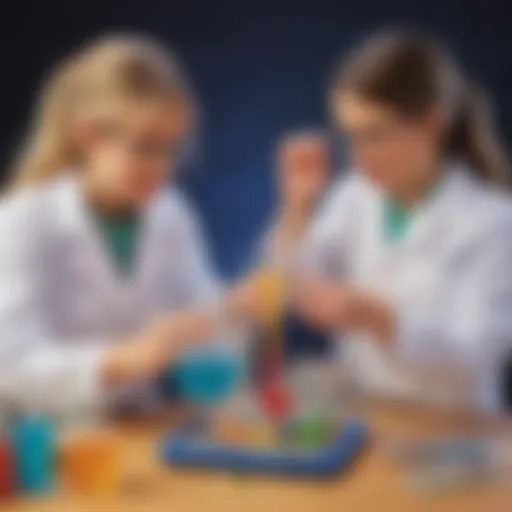
- Wear Protective Gear: Safety goggles, gloves, and lab coats should be mandatory during experiments. This not only protects against potential hazards but also makes students feel like scientists.
- Proper Handling of Materials: Educating students on how to handle lab materials, especially chemicals or sharp objects, is vital. Use demonstrations to showcase the correct methods.
- Emergency Procedures: Clear emergency protocols should be outlined and practiced. Every classroom should have a plan for fires, spills, or other emergencies, so students know how to respond calmly.
"Safety first, because an accident is a true teacher of caution."
Creating a Safe Learning Environment
A safe learning environment extends beyond the implementation of rules; it encompasses the physical space of the classroom, the relational dynamic among students, and the overall emotional climate. Educators can enhance safety in various ways:
- Organized Workspace: Keeping the classroom tidy helps minimize accidents. Each station or lab area should be clearly designated, ensuring that materials don’t clutter the paths.
- Positive Relationships: Encourage open dialogue among students and between students and teachers. When children feel safe and respected, they are more likely to express concerns or uncertainties regarding safety.
- Regular Safety Drills: Incorporating regular safety drills into the curriculum can help solidify the importance of safety. These drills instill a sense of preparedness and help students internalize safety practices while learning.
Educating Students on Safety Equipment
To truly cultivate a safety-oriented mindset among students, they must be familiar with and understand the equipment designed to protect them. This education can unfold in several engaging ways:
- Hands-On Demonstrations: Show how to use safety equipment. For instance, practice putting on safety goggles correctly or demonstrate how to use a fire extinguisher in a controlled setting.
- Interactive Lessons: Use games or quizzes focused on safety equipment. For instance, students can team up to match safety gear with its purpose, reinforcing their memory through fun.
- Classroom Tours: Familiarize students with all safety equipment located in the classroom. Creating a scavenger hunt for such items can make this approach enjoyable and informative.
Innovative Science Teaching Approaches
Innovative science teaching approaches are crucial in transforming the learning experience for young students. These methods are designed to engage children actively—fostering their natural curiosity and encouraging them to think critically about the world around them. By integrating modern educational strategies, educators can better prepare students for complex scientific challenges in the future.
The significance lies in their ability to make science accessible and enjoyable. It’s not about preaching facts; it’s about sparking interest and instilling a sense of wonder. As students engage with these innovative techniques, they build important skills like teamwork, problem-solving, and the ability to make connections between different scientific concepts.
When implementing these approaches, teachers must pay attention to individual learning styles, provide adequate resources, and be open to adapting their methods based on student feedback. Here we delve into three key strategies that are reshaping the science classroom landscape:
Integrating STEM into the Curriculum
Integrating STEM—Science, Technology, Engineering, and Mathematics—into the curriculum has become essential. It’s no longer just about segregated subject areas; blending these fields not only enhances relevance but also reflects real-world applications.
- Building Connections: By correlating topics across subjects, students see the broader context. For instance, a lesson on ecosystems can incorporate math through data collection (graphs, statistics), engineering via habitat design, and technology through digital modeling tools.
- Promoting Critical Thinking: STEM integration challenges students to think beyond rote memorization. When they work on projects like designing eco-friendly homes, they must consider various factors, enhancing problem-solving abilities.
- Equitable Access: Implementing these approaches ensures all students, regardless of their background, can engage with scientific concepts. This inclusivity allows diverse perspectives during discussions, enriching the learning environment.
Project-Based Learning in Science
Project-based learning (PBL) shifts the focus from traditional lectures to active exploration. In a PBL framework, students tackle real-world problems which culminate in engaging projects. This method has broad benefits:
- Depth Over Breadth: Instead of covering countless topics superficially, students dive deeply into a single issue. For example, studying climate change through a community garden project not only teaches the science behind it but also emphasizes sustainability and teamwork.
- Fostering Collaboration: Students often work in groups, which cultivates skills like negotiation, communication, and shared responsibility. This setup mirrors real-life working situations, preparing them for future collaboration.
- Enhanced Retention: Active participation leads to better retention of information. When students create models or presentations on their chosen topic, they're more likely to remember and appreciate the material.
Flipped Classroom Model
The flipped classroom model bends the traditional idea of lecture-first learning. Instead, students engage with educational content at home via videos or reading materials, while in-class time is devoted to applied learning—discussions, hands-on activities, and Q&A sessions.
- Personalized Pace: Differentiation is easier; students can learn at their own speed at home and come to class prepared to engage with the content actively. Those struggling with certain topics can revisit material as needed.
- Maximized In-Class Interaction: Class time transforms into a dynamic space for collaboration and experimentation, which is more productive. Whether they're experimenting with chemical reactions or analyzing scientific data, students are actively engaged.
- Teacher's Role Reimagined: Educators become facilitators and guides, encouraging spontaneous curiosity and direction rather than just delivering information. This shift allows teachers to tailor their approach to better meet students' needs.
Incorporating innovative science teaching approaches cultivates a responsive educational atmosphere where inquiry and creativity thrive.
By embracing these strategies—integrating STEM, engaging in project-based learning, and flipping the classroom—educators can revolutionize science education for young learners. As a result, children not only gain knowledge but also develop the skills and mindset to become the scientists of tomorrow.
For further information on innovative teaching approaches and how to implement them effectively, check resources like edutopia.org and teaching.channel.org.